
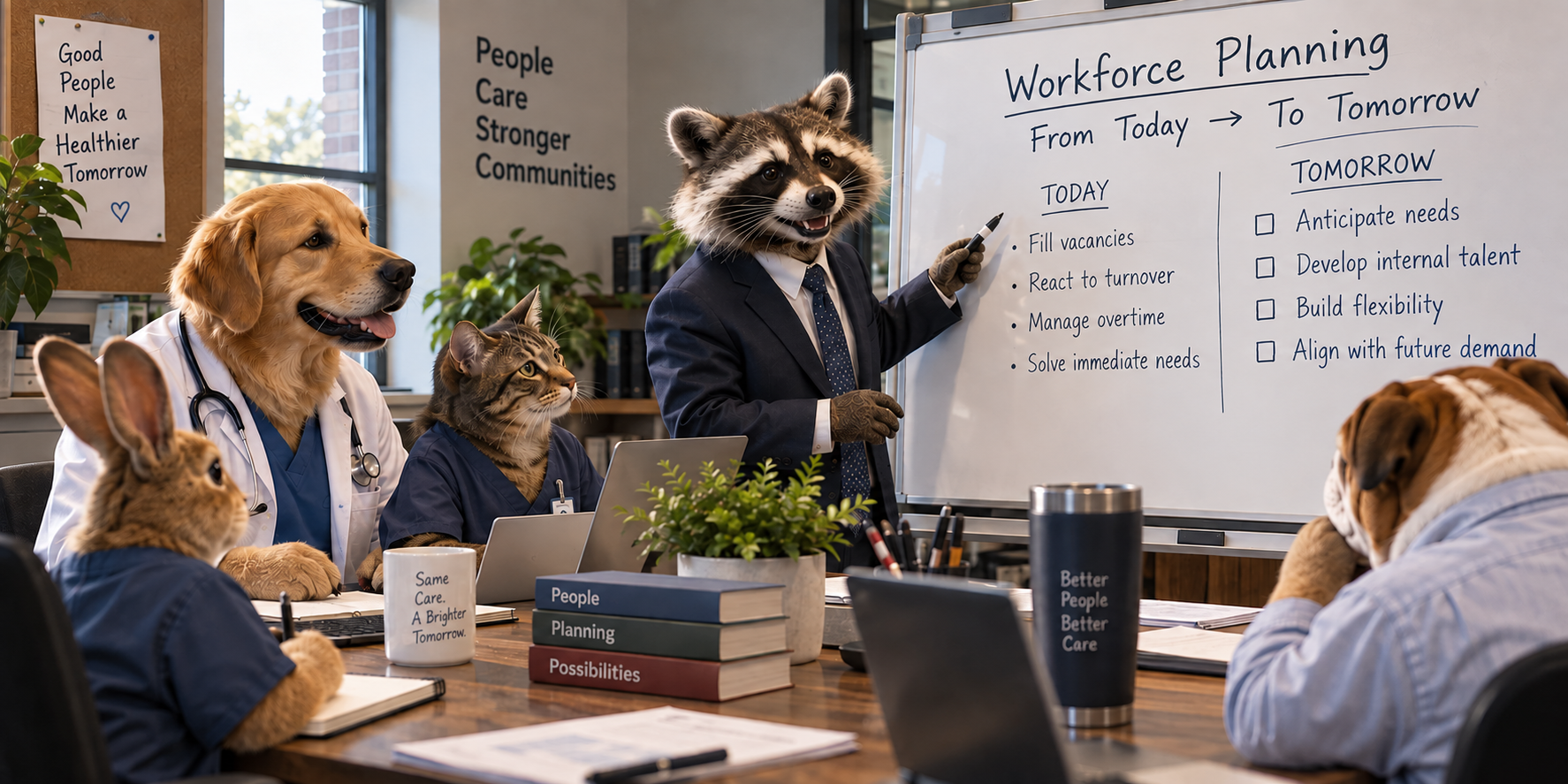
Healthcare workforce challenges rarely happen without warning. Turnover trends, anticipated retirements, leaves of absence, changing volumes, recruitment timelines, and evolving service needs can often be identified well before they become operational problems.
Yet too often, workforce decisions remain reactive.
A position becomes vacant, and the immediate response is to replace it. Volume increases, and overtime follows. A key leader leaves, and the search for a successor begins.
A more sustainable approach is to ask a different question:
Are we building the workforce we need for where the organization is going—not simply replacing the workforce we have today?
At Altius, we believe effective workforce optimization requires organizations to look ahead. That means connecting workforce planning with productivity expectations, operational needs, employee development, and organizational strategy.
- Implement Prospective Hiring Practices
Workforce planning extends beyond the current vacancy list. Historical turnover, projected volume, productivity performance, anticipated service changes, and current position control all inform future staffing decisions.Organizations should regularly evaluate staffing needs against workload and performance expectations rather than automatically replacing every vacancy. A position that was necessary several years ago may not be the right position, or even the right role, for the organization today.Recruitment and orientation timelines should also be considered. Understanding how long it takes to recruit, hire, onboard, and train employees allows leaders to anticipate needs before they become staffing emergencies.
The goal is to move from filling positions to intentionally designing the workforce.
- Establish Strong Succession Plans
Succession planning should not be limited to senior leadership. Critical positions exist throughout healthcare organizations, and losing the right person without a plan can quickly affect operations, productivity, employee engagement, and patient care.When possible, anticipated retirements and extended leaves should be incorporated into workforce planning well in advance. At the same time, organizations should identify emerging talent and create opportunities for employees to develop the skills necessary to assume greater responsibility.
Investing in internal talent strengthens the leadership pipeline, supports retention, and preserves valuable organizational knowledge.
Developing the next generation of leaders should begin before the position becomes vacant.
- Build a More Flexible Workforce
Healthcare demand is rarely static, so staffing models shouldn’t be either.Organizations should evaluate the appropriate balance of full-time, part-time, and per diem employees and determine whether staffing structures provide enough flexibility to respond to fluctuations in workload.
Cross-training is another important component. Expanding employee skill sets can increase coverage options, reduce operational silos, support career development, and decrease reliance on overtime or external labor.
Flexibility isn’t simply about having fewer people. It’s about having the right resources available when and where the work occurs.
Move From Reactive Staffing to Strategic Workforce Planning
The strongest healthcare organizations don’t wait for a workforce challenge to determine how they will respond. They continuously evaluate their staffing models, develop their people, monitor changing workload, and anticipate what comes next.
At Altius, we help organizations connect workforce data, productivity expectations, operational realities, and leadership strategy to create staffing models that are both efficient and sustainable.
Because workforce optimization isn’t simply about managing today’s staffing.
It’s about preparing your organization for tomorrow’s needs.